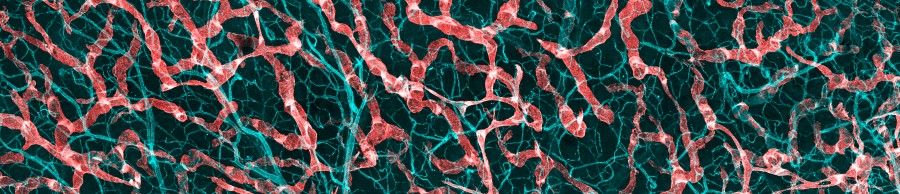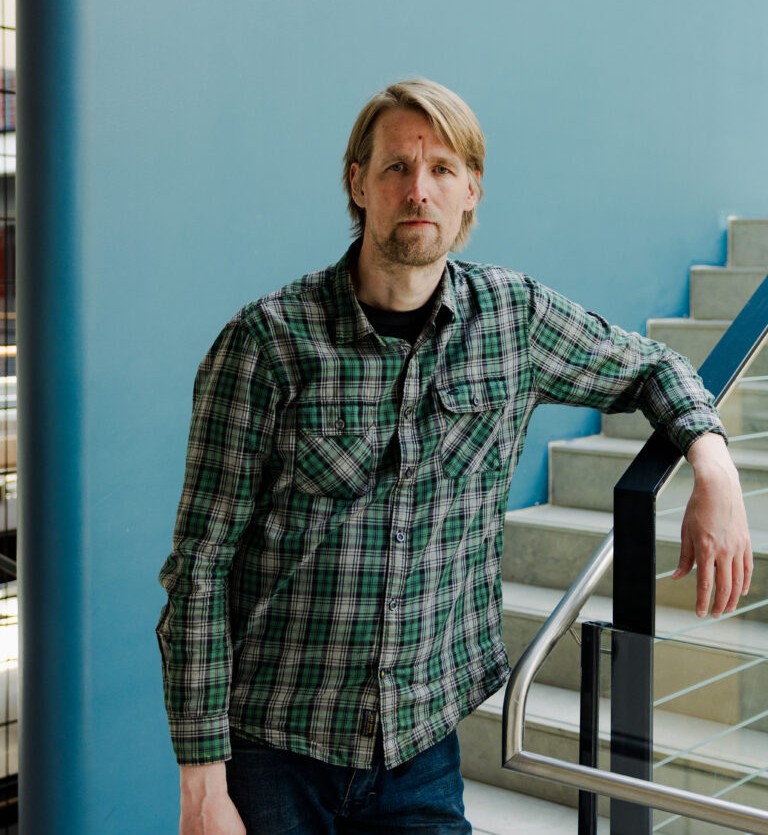
Kari Vaahtomeri leads a research group at the Wihuri Research Institute and the University of Helsinki. Photo: Elias Ervast.
Kari Vaahtomeri leads the Lymphatic Endothelial Cell and Leukocyte Communication Research Group at the Wihuri Research Institute. He explains what it is like to explore the rules of cell migration guidance that may change our understanding of how the body functions.
“I am interested in the fundamental mechanisms that govern cell behavior. At present, my research group is investigating how the timely movement of cells is regulated within the human body.
For example, during human embryonic development, it is critical that groups of cells are able to migrate and occupy the correct locations at precisely the right time. Likewise, immunity depends on the ability of immune cells to migrate efficiently to lymph nodes or sites of infection when the body responds to bacteria and viruses.
Our research focuses particularly on how so-called lymphatic endothelial cells regulate the trafficking of antigen-presenting immune cells from peripheral tissues to the lymph nodes.
Endothelial cells act much like signposts by secreting proteins that create concentration gradients, which immune cells follow to find their destination. However, rather than broadcasting instructions loudly, they regulate these chemical cues in a highly subtle and precise manner. For example, we have observed that immune cells enter lymphatic vessels at specific, recurring sites. At these locations, endothelial cells express specialized ‘guidance proteins’ that direct cellular entry and ensure that the process is tightly regulated.
Immunity Is Key to the Treatment of Many Diseases
We have long known that the number of rapidly migrating immune cells, particularly dendritic cells, reaching the lymph nodes is directly associated with the effectiveness of adaptive immunity.
If we gain a deeper understanding of how the body regulates the movement of these cells from peripheral tissues into lymphatic vessels and subsequently into lymph nodes, it may eventually become possible to modulate this process therapeutically. Inhibiting immune cell trafficking is often easier and could be beneficial in conditions such as autoimmune diseases or in preventing transplant rejection.
Enhancing the process is considerably more challenging, but it remains an important goal because immunity plays a central role in nearly all diseases, including cancer. Vaccines, for instance, rely on the efficient delivery of antigenic material to the lymph nodes. For this reason, understanding these fundamental mechanisms could have far-reaching implications for human health and the treatment of disease.
Technological Advances Expand the Boundaries of Research
Continuously developing technologies shape our research. Any given technology can only provide answers to scientific questions up to a certain point.
Major technological advances enable us to ask questions that may previously have been impossible to address simply because the necessary tools did not exist.
Microscopy, in particular, has advanced significantly in two directions. Today, we can visualize biological processes occurring inside a living mouse. At the same time, our ability to observe increasingly smaller structures has improved dramatically. We can now use microscopy to study, for example, the behavior of individual proteins within cells.
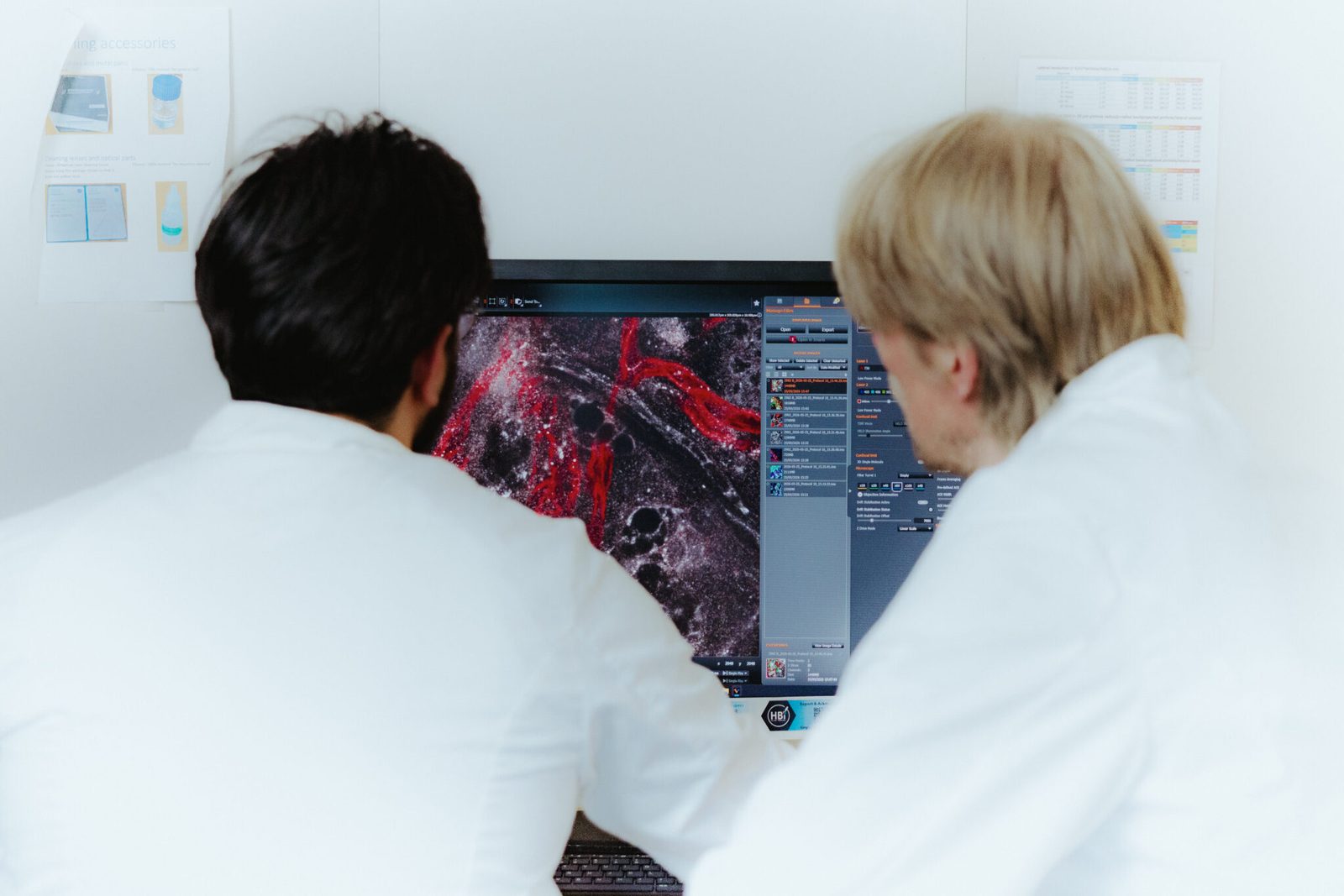
Mario Karam (left) is one of the doctoral researchers working in Kari Vaahtomeri’s research group.
Unexpected Discoveries Are the Most Rewarding Part of the Work
We conduct fundamental research, which often involves highly routine and repetitive work: spending hours in a dark microscopy room and repeating the same experiments over and over again. The most rewarding moments are the rare occasions when something truly significant appears under the microscope.
Researchers usually have a hypothesis or expectation about what they might find, but complete surprises also occur because we still do not fully understand what is happening within cells and tissues. In those moments of discovery, it is often immediately apparent that we are observing something important, particularly when the difference from the control condition is clear.
Almost instantly, one begins to consider what the finding might mean and where it could lead. The excitement stems not only from the observation itself but also from the realization that it may open the door to something much larger. Over the course of a scientific career, there are ultimately only a handful of truly transformative discoveries that drive an entire research field forward. Those are the defining moments, when even at the microscope one begins to see the possibility of an entirely new direction for the research.”
Text: Heini Huhtala, Jenny and Antti Wihuri Foundation sr
Photos: Eliast Ervast