

The Wihuri Research Institute is a non-profit biomedical research institute for top-quality biomedical research and learning in Helsinki, Finland.
The Wihuri Research Institute (WRI) is at the forefront of biomedical research, with the goal of advancing the well-being of humankind, and it provides:
State-of-the-Art Research
The research program at WRI consists of both fundamental and translational biomedical research. Our seven research groups collaborate to improve our understanding of the molecular and cellular basis of the vascular system, with the aim of enhancing the treatment of various human diseases.
Read more about our research program
First-class research training
Working in close cooperation with the University of Helsinki doctoral programs and career development network, we offer postdoctoral fellows as well as students exciting research and study opportunities. We are continuously looking for enthusiastic individuals to join our research groups.
Find out what we offer students and postdoctoral fellows
Interaction and collaboration with an international network of scientists
We actively participate in the global scientific community by attending and organizing seminars and symposia, such as the annual Wihuri Research Institute Symposium.
Read more about the Wihuri Research Symposium
A fertile environment for biomedical and translational research
The WRI is located in Biomedicum Helsinki at the Academic Medical Center Helsinki (AMCH), which comprises the Faculty of Medicine at the University of Helsinki and the Helsinki University Hospital (HUS). Our research activities greatly benefit from the shared technology and core facilities on the AMCH campus, one of the largest in the Nordic countries.
Wihuri Foundation
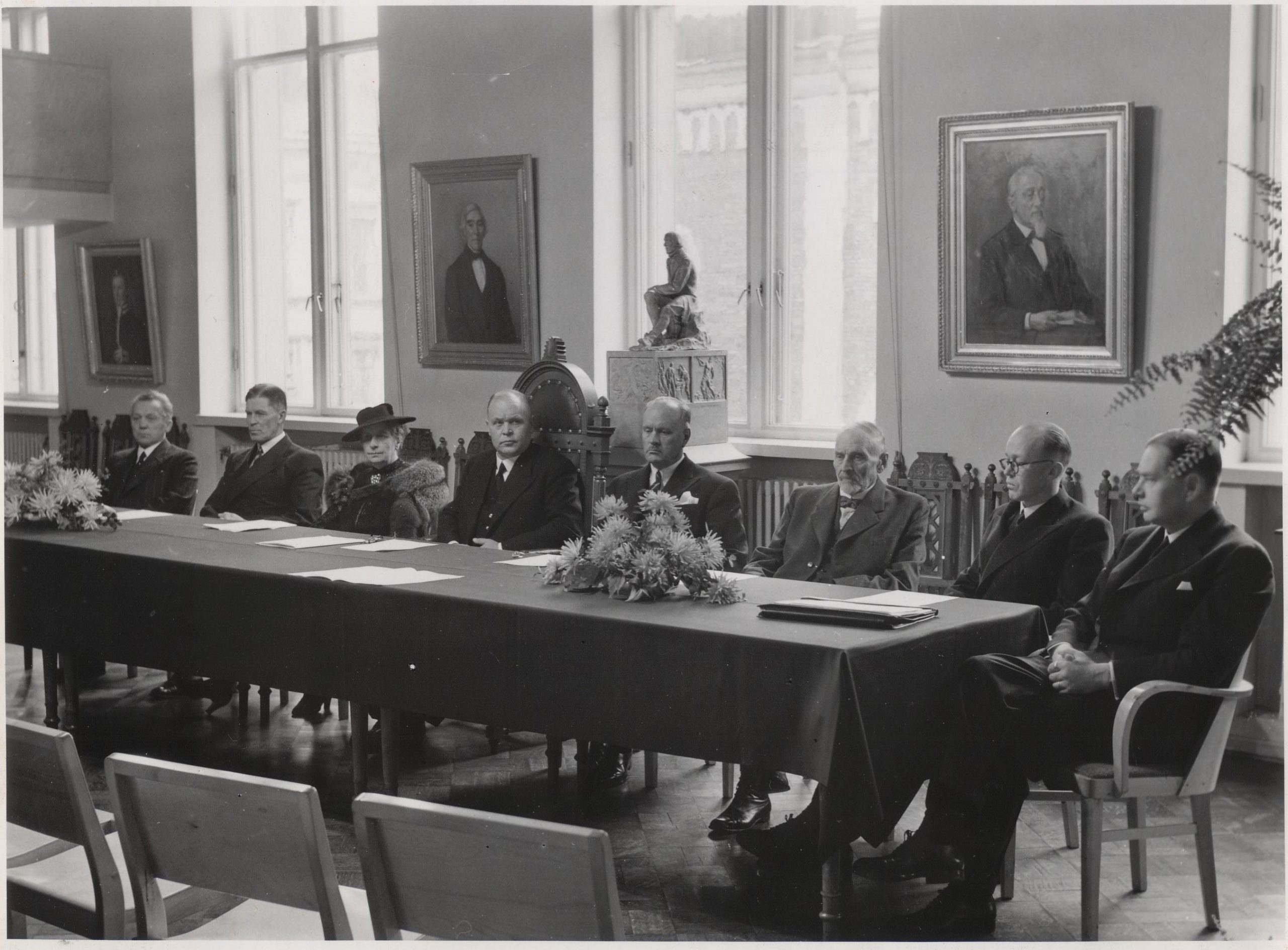
Founded in 1944, the Jenny and Antti Wihuri Foundation is a non-profit cultural foundation that supports a wide range of activities, including those of the Wihuri Research Institute.
The Jenny and Antti Wihuri Foundation awards grants and prizes in science, art and other areas of societal activity. The Foundation also acquires art for the Wihuri Foundation Art Collection at the Rovaniemi Art Museum, and maintains scholarship and residency programs. Its most long-term initiative is the Wihuri Research Institute, which is legally a part of the Foundation.
The Foundation is managed by Executive Director Arto Mäenmaa and an eight-member Board of Trustees, which holds all decisive power concerning the Wihuri Research Institute. The Foundation has also appointed a scientific advisory board to assist with the assessing of the Institute’s current operations and future direction.
The Members of the Scientific Advisory Board in 2026 are
- Chair, Professor Tomi Mäkelä, University of Helsinki
- Professor Christer Betsholtz, Karolinska Institutet, Stockholm
- Professor Sirpa Jalkanen, University of Turku
- Professor Tatiana Petrova, University of Lausanne
- Professor Seppo Ylä-Herttuala, University of Eastern Finland
Our history
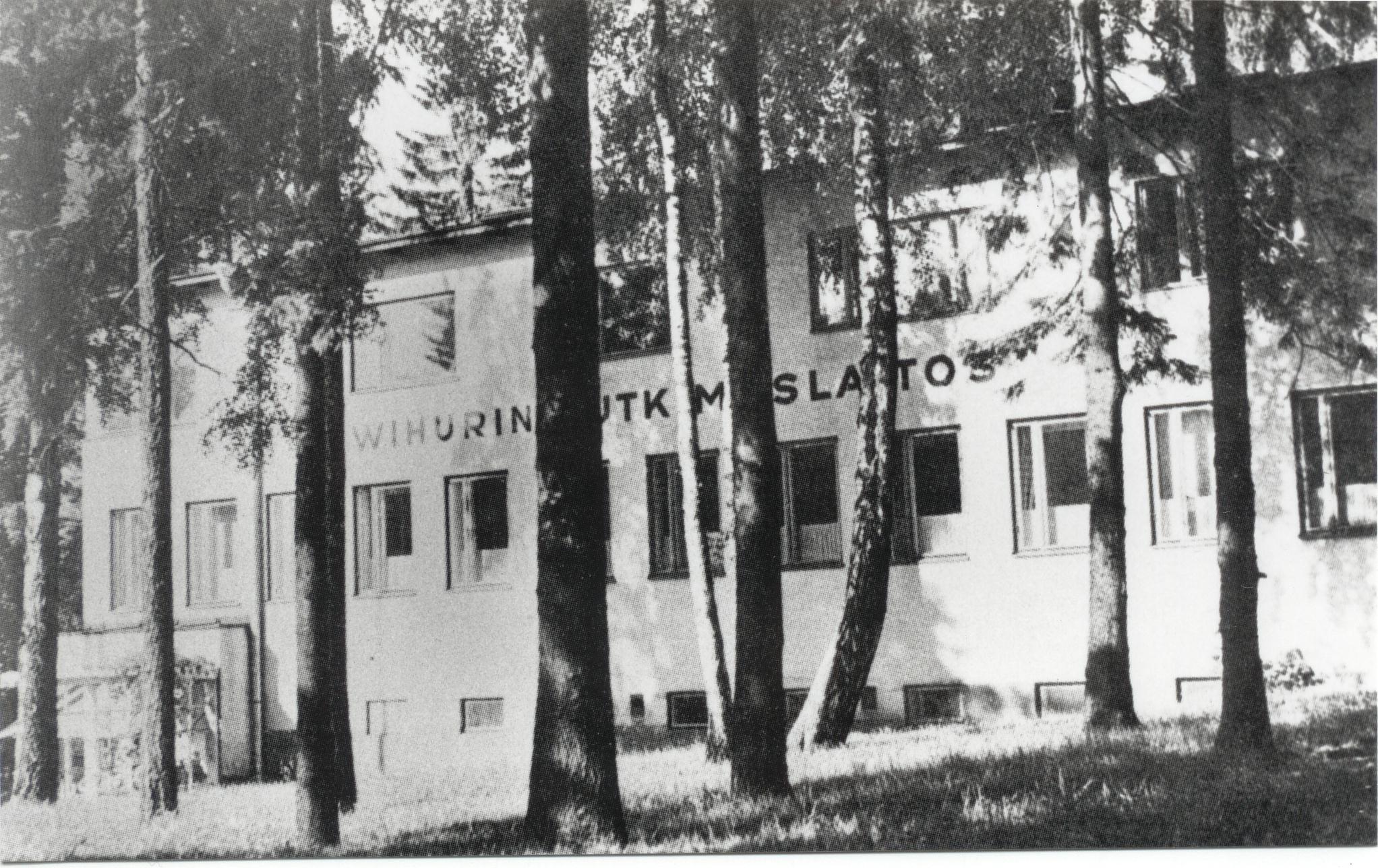
The Wihuri Research Institute was founded in 1944 to provide exceptionally talented scientists the opportunity to devote their time to research that would benefit the humankind.
The Wihuri Research Institute was founded in 1944 by the Jenny and Antti Wihuri Foundation. The purpose, as stated in its rules, was to “create conditions for Finnish scientists considered to be especially talented in the fields of natural sciences, medicine or technology to develop their accomplishments as far as possible, so that, free from all other duties, they can devote themselves entirely to their research and by drawing benefit from all recent achievements of science, strive to create something new for the benefit of mankind.”
From 1945 to 2013, the Wihuri Research Institute (WRI) was located in the Salus Hospital, which was donated to the Wihuri Foundation by the Rytkönen sisters in 1944. During the first decades, the institute run a small research hospital alongside its research activities. Hospital activities ended in 1983 to release funds for research. In 2013, the WRI moved to the Biomedicum Helsinki research building at the Academic Medical Center Helsinki.
During its 80 years of operation, the WRI has had six directors, each of whom has created their own research program for the Institute. The Institute has made a significant contribution to basic research of cardiovascular diseases.
The primary research focus of the current director, Taija Mäkinen, centers on understanding the mechanisms governing the growth and function of the lymphatic vasculature and its interplay with the surrounding tissues. Her pioneering research has identified regulators of lymphatic vasculature that have implications for genetic human diseases, providing targets for treatment.
The primary research focus of Kari Alitalo was on the mechanisms that establish and maintain blood and lymphatic vascular systems, and their involvement in various human diseases. He has pioneered the work on vascular growth factors and their receptors, which regulate the blood and lymphatic vessels, and provide targets for the treatment of numerous vascular diseases.
Petri Kovanen developed the original concept in which activated “allergy cells”, the mast cells, contribute to cholesterol accumulation in the arterial wall and to the ensuing formation of atherosclerotic lesions. In late stages of lesion development, proteolytic enzymes and proinflammatory mediators released from activated mast cells contribute to plaque erosion and rupture, leading to acute cardiovascular events. The newly discovered mast cell-dependent molecular mechanisms provide potential therapeutic targets for atherosclerotic cardiovascular diseases. After Kovanen’s retirement as the director, the Institute moved to Biomedicum Helsinki.
During the period of Vesa Manninen as its director, the research program of the Wihuri Research Institute included both clinical and experimental studies that served to define the roles of risk factors, such as dyslipidemia, hypertension, infections, and inflammation in coronary heart disease and myocardial infarction. Furthermore, the roles of blood coagulation and its clinical manifestations were studied in the pathogenesis of atheroclerosis. This research had close links to pharmacological studies on the prevention and treatment of cardiovascular diseases, with a special focus on the treatment of dyslipidemias.
Pentti Halonen, professor of Cardiology at the Helsinki University Hospital, found it ideal that the Wihuri Research Institute and the Salus Hospital coexist in the same building. This was a unique opportunity to perform translational research, which enabled new diagnostic and therapeutic approaches to be implemented in patients. Halonen transformed the Wihuri Research Institute into a modern cardiology laboratory, and so created a critical mass that enabled the Wihuri Research Institute and Salus Hospital to jointly become the place in which the ”Finnish cardiology was born”. The Salus Hospital, called the “Experimental Hospital of the Wihuri Research Institute”, also offered an opportunity for young physicians to treat patients and to obtain clinical training in internal medicine and an in particular in cardiology. The clinicians could also perform scientific research in the Wihuri Research Institute laboratory to obtain the M.D./Ph.D. degree. After the death of Professor Halonen, the Hospital activities were terminated.
Alvar Wilska was an exceptionally multi-talented inventor, physicist, and physician-scientist. He was of world-class scientist and ahead of his time in many various fields. His main interest was the development of electrophysiological methods and electron microscopes. He was also a passionate promoter of many public health issues and even wrote about cholesterol in coronary heart disease. After the fusion of Wihuri Research Institute and the Salus hospital in Kaivopuisto, Helsinki, Wilska found it too demanding to act simultaneously as the Professor of Physiology at the University of Helsinki, as the Chief Physician of the Salus hospital and as the head of the Wihuri Research Institute. He thus resigned from the latter two positions and continued his brilliant scientific-technological career in Helsinki and abroad.