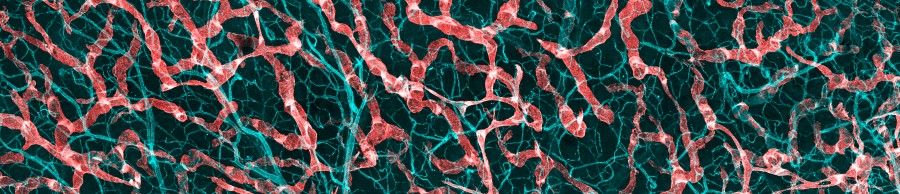
A groundbreaking study led by Professor Taija Mäkinen, Director of the Wihuri Research Institute, reveals how the puzzle-like pattern of lymphatic endothelial cells enables them to withstand changes in fluid pressure, such as tissue swelling. Similar cell shapes can also be found on the surface of plant leaves.
The lymphatic system plays a vital role in maintaining the body’s fluid balance and supporting immune defenses. Lymphatic vessels are composed of a single layer of endothelial cells that allow fluids, cells, and large molecules to transfer from surrounding tissues into the vessels.
To efficiently absorb and transport fluid, these vessels must be highly permeable while also being flexible enough to withstand sudden changes in tissue fluid volume, such as swelling, without rupturing.
In a study published in the journal Nature, a research group led by Professor Taija Mäkinen, Director of the Wihuri Research Institute, investigated how the thin layer of endothelial cells maintains its integrity under varying fluid pressure conditions. The study found that the key factor is the cells’ ability to continuously change their unique shape.
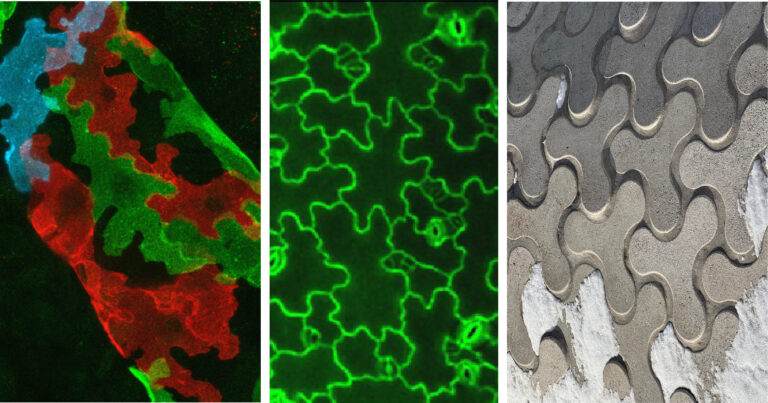
The jigsaw-like cell shape is found in lymphatic vessels as well as on the surface of plant leaves. The same principle has also been applied in human designs.
Shared biological principle
“It’s long been known that the endothelial cells of lymphatic vessels resemble oak leaves or jigsaw puzzle pieces. The reason for this peculiar shape has, however, remained a mystery, and researchers have previously been unable to replicate it in cultured cells,” says Mäkinen.
A similar jigsaw puzzle–like shape can be seen in a completely different type of cell on the surface of plant leaves. This pattern helps plant cells withstand internal fluid pressure, which is vital for plant growth and structural support.
The fact that these jigsaw puzzle–like cells function similarly in both plants and mammals points to a fundamental biological principle: this distinctive cell shape enhances structural stability in organisms of various types. The same principle has also been applied in human design: paving stones, for example, are often arranged in undulating or interlocking patterns to improve durability and resistance to wear.
New Discovery Opportunities
“Our study’s key findings were based on experiments in which we labeled individual endothelial cells or the cell scaffold with different colors. We then used two-photon microscopy to follow the behavior of individual cells in living mice for minutes, hours, or even months,” says Mäkinen. “This technology enabled us to repeatedly image the same cells in the same mouse, providing us with unprecedented information about how they adapt dynamically to tissue conditions.”
These discoveries were made at Uppsala University, where Mäkinen’s research group was based until moving to the Wihuri Research Institute and the University of Helsinki at the beginning of this year. The HiLife Imaging Unit at the University of Helsinki is currently acquiring a state-of-the-art two-photon microscope, which is being funded jointly by the Jenny and Antti Wihuri Foundation, the University of Helsinki, and the Academy of Finland. This new technology will allow researchers to expand their understanding of the structure and function of lymphatic vessels.
The Wihuri Research Institute, founded and maintained by the Jenny and Antti Wihuri Foundation, focuses on cardiovascular research. The institute, which has achieved significant international results, operates at the Biomedicum Helsinki Research Center in Meilahti.

Professor Taija Mäkinen
Image in the middle: A puzzle-like shape in mouse lymphatic endothelial cells (top, photo by Hans Schoofs); cells on the surface of a plant leaf (center, modified; © 2018 Sapala et al.; used under CC BY 4.0 license; https://doi.org/10.7554/eLife.32794); and the capstones of the hills in the inner courtyard of the Lasipalatsi Palace in Helsinki (bottom, photo by Taija Mäkinen).